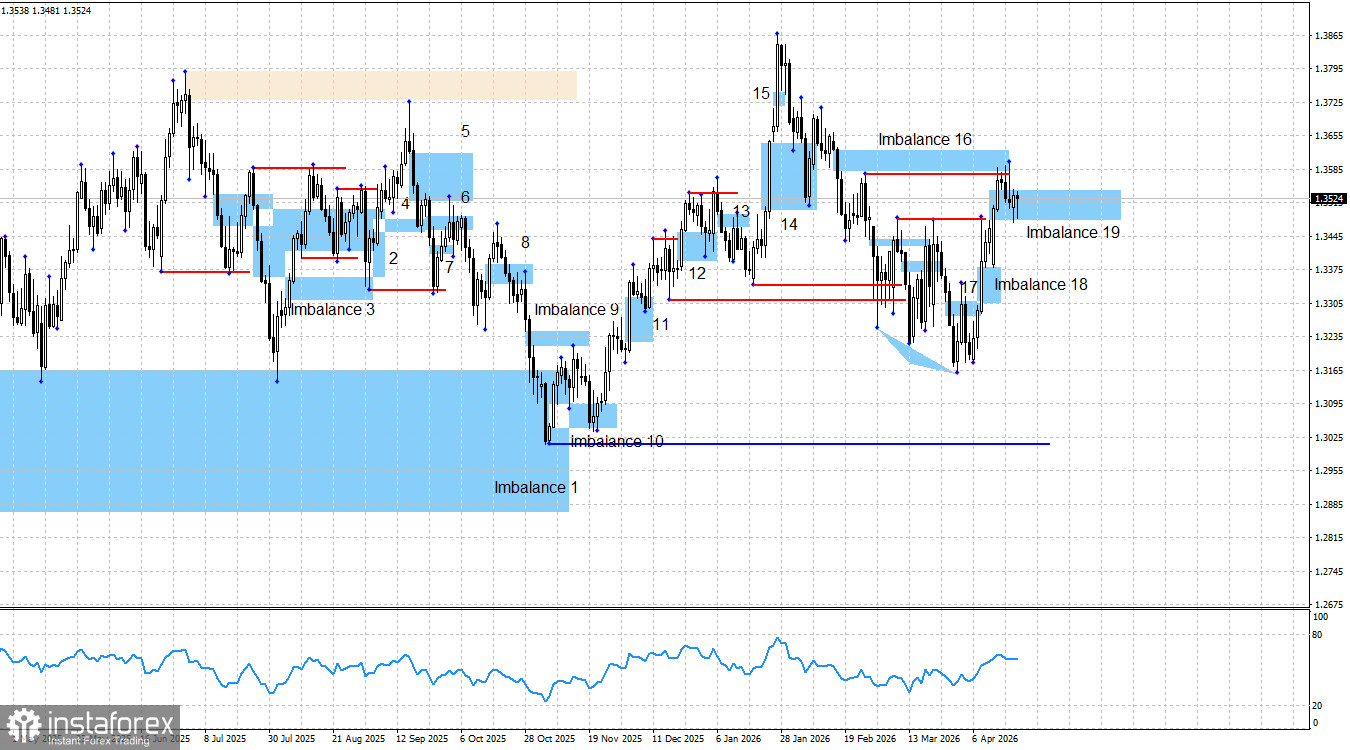
The GBP/USD pair continues a mild corrective decline following a pullback that began after liquidity was taken from the February 26 swing and the imbalance 16 was filled. I do not expect a strong decline in GBP/USD unless the conflict in the Middle East resumes this week. In that case, bears may go back on the offensive, and chart patterns will not be able to protect the pound from falling. At the moment, the situation in the Middle East remains difficult and tense, but it is not worsening. The Strait of Hormuz has effectively not been reopened, and negotiations between the United States and Iran have long been at a deadlock, continuing intermittently over the years. Washington's main demand—that Tehran abandon nuclear weapons—is not something Iran is willing to accept. As the saying goes, "things are still where they were." The situation has not improved, but it has not worsened either—for now. Everything will be decided on Wednesday: either the war resumes, or negotiations take place, succeed, and the truce is extended. A reaction to imbalance 19 (bullish) may push bulls toward new advances. Therefore, in the coming days, it is important to watch for the formation of a new bullish signal.
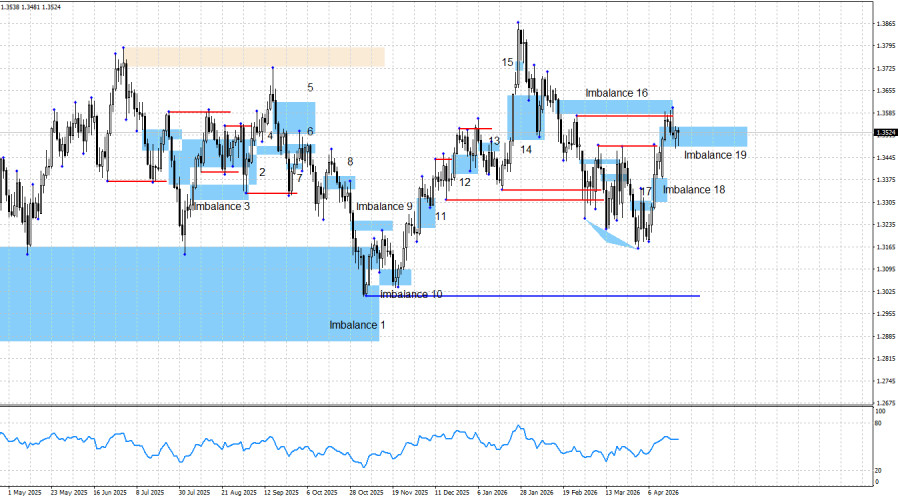
The latest rally in the pound began with a "Three Drives Pattern." Thus, traders received a bullish signal at the very beginning of the move, and the trend has remained bullish throughout. At present, the truce is quite fragile, and the parties involved have yet to decide whether to continue negotiations or resume hostilities. Talks may resume this week, but the conflict could also reignite. The Strait of Hormuz is effectively under a dual blockade, and the Bab el-Mandeb Strait could join it. However, as of Tuesday, the situation has not changed. Both sides show willingness to reach an agreement, but no concrete steps are being taken.
The "Three Drives Pattern," marked on the chart with a triangle, allowed bulls to take control. A second reaction occurred at imbalance 16, but such reactions are usually weaker than the first. Additionally, the pair swept liquidity from the February 26 high, and together these two factors triggered the current corrective pullback, which may end at imbalance 19. Thus, a new bullish signal may form soon, or the bullish pattern could be invalidated, allowing bears to launch a new offensive.
Tuesday's economic news background was fairly interesting and could have supported a new bullish push. The UK unemployment rate for February came in significantly better than expected—4.9% versus 5.2%. Average wage growth slowed to 3.8%, while new unemployment claims rose by 26.8 thousand. In fact, the latter two reports weighed against the pound, but the unemployment rate is a much more important indicator than the other two combined. The market ignored this information.
In the United States, the overall backdrop remains such that, in the long term, little can be expected other than a decline in the dollar. Even the conflict between Iran and the US does little to change this. Geopolitics temporarily reminded markets of the dollar's safe-haven status, but overall, the long-term outlook for the US dollar remains difficult. The US labor market continues to weaken, the economy is approaching recession, and the Federal Reserve—unlike the ECB and the Bank of England—does not plan to tighten monetary policy in 2026. Additionally, four major protests against Donald Trump have taken place across the country. From an economic standpoint, I see no basis for sustained dollar growth.
Economic calendar for the US and the UK:
UK – Consumer Price Index (06:00 UTC)
On April 22, the economic calendar contains only one entry, albeit an important one, which—unfortunately—may also be ignored, as was yesterday's data. The impact of the news flow on market sentiment on Wednesday may again be very limited.
GBP/USD forecast and trading advice:
For the pound, the long-term outlook remains bullish. The "Three Drives Pattern" signaled potential growth, followed by the formation of a bullish imbalance and a bullish signal. Price swept liquidity from bullish swings on March 10 and March 23, as well as from the February 26 swing, but bears failed to initiate an offensive in either case. This is another positive factor for the pound—traders remain in a bullish mindset. Thus, under current conditions, despite geopolitical risks, I believe the upward movement will continue. Most likely, the euro will also continue to rise. My target for the pound is the 2026 high. The reaction to imbalance 16 triggered a corrective pullback, but a reaction to imbalance 19 may provide traders with a new buying signal.