
MobileTrader
MobileTrader - ¡El comercio siempre al alcance de su mano!
¡Descárgalo y empieza ya!


 26.08.2026 03:55 PM
Four key events that are reshaping the balance of power are in investors' spotlight today.
While panic about the US fiscal burden and the Treasury's dramatic steps push gold toward a historic $4,500/oz, the oil market is responding with a deep sell-off to unexpected diplomatic progress in the Middle East, effectively discounting the new sanctions.
Meanwhile, Asian stock markets and the semiconductor sector are showing remarkable resilience, staging sharp reversals ahead of the week's major tech reports. And boundaries of the possible are being redrawn: the SpaceX–Nvidia alliance has announced plans to deploy full AI data centers into orbit. The tech giants are proving that even amid total market turbulence, innovation keeps setting the rules.
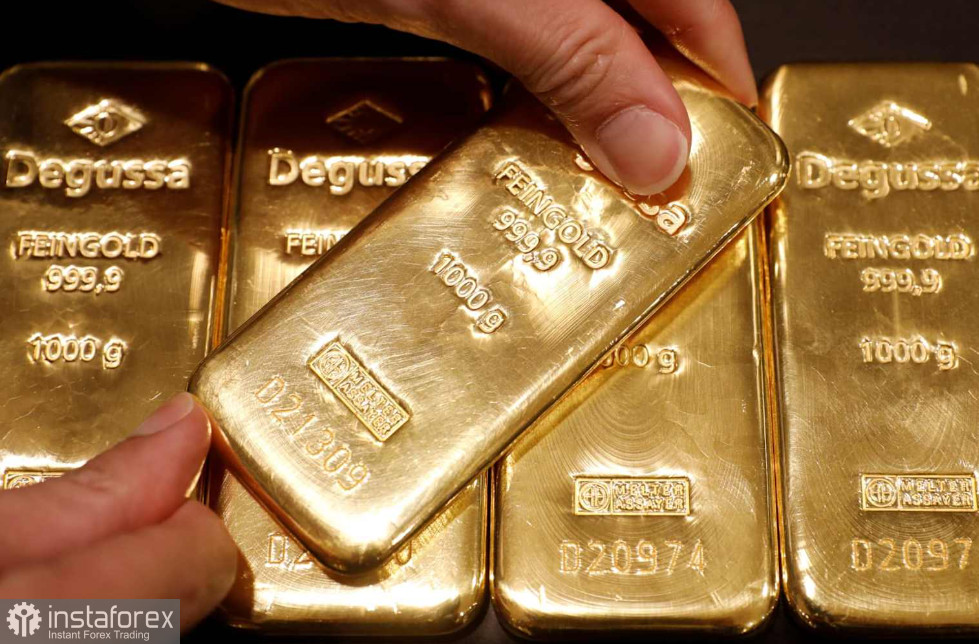
Investors are buying futures by the record billions, and unexpected actions by the US Treasury have caused markets to question the dollar's reliability. Global markets are in turmoil, and the safe?haven metal is enjoying a true boom. Speculative purchases of gold futures hit a ten?year high.
The frenzy was driven not only by rising fears about the overwhelming US public debt but also by a sudden, let's say unconventional move by the Treasury that rocked Wall Street last week.
Secret signals and billion?dollar inflows
The numbers speak for themselves. According to commodity desk analysts at Goldman Sachs, using CFTC reports, speculators put a net $22.2 billion into gold futures in just three weeks (ending August 18). That is the largest nominal volume in more than a decade.
Player appetites are growing: net long positions surged to the 93rd percentile of the two?year range, and the number of net?long contracts held by non?commercial traders topped 222,000.
The Treasury's demarche as the trigger
The trigger for this gold rally was the shock announcement by the US Treasury expanding its long?bond buyback programme. The market reacted instantly and nervously.
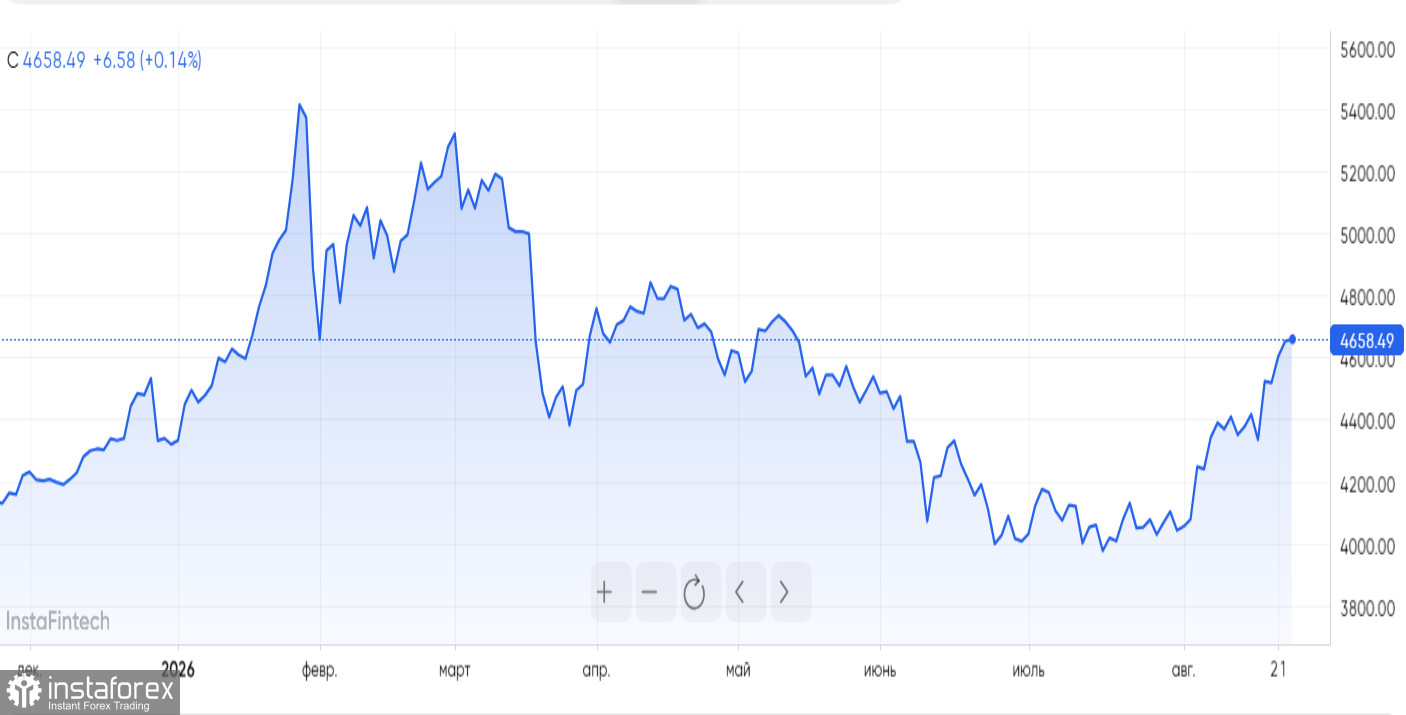
From August 18 to 21, gold prices jumped nearly 6%, and spot prices for the first time in history pierced the psychological $4,500/oz mark. By Monday, August 24, the metal had consolidated gains and reached levels not seen since mid?May, CNBC notes.
A crisis of confidence in the dollar
What exactly scared investors? As Jonathan Garber of Goldman Sachs points out, many market participants saw the Treasury's move not as economic stewardship but as a desperate "attempt to influence pricing at the long end of the yield curve."
In plain terms, speculators took it as a sign that the US government bond market can no longer absorb pressure on its own. That sparked acute concerns about fundamental confidence in the US dollar.
The result was predictable: open interest in gold rose across trading sessions, adding another $8.9 billion. While US authorities try to smooth turbulence in the debt market, global investors prefer the one asset no central bank can print: physical gold.
Want to trade these moves and profit from global market reversals? The instruments mentioned — global indices and big tech stocks — are tradable on the InstaForex platform. Don't miss the chance to react faster than others: open a trading account and download the mobile app to trade 24/7.

Global oil prices plunged to weekly lows: cautious diplomatic signals from the Middle East outweighed loud but hollow threats of US sanctions. The market effectively declared that peace talks matter more than sanctions rhetoric.
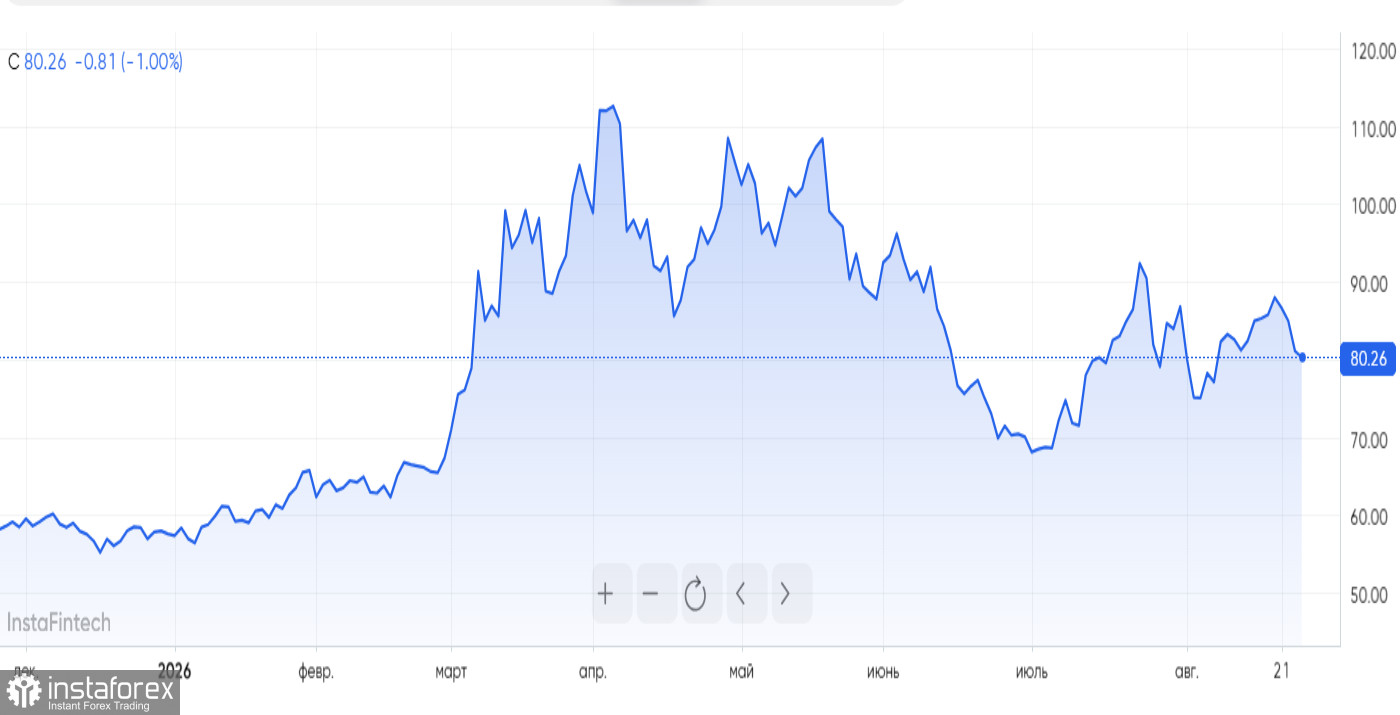
Oil bulls were knocked out. Brent fell $3.59 (3.9%) to $88.58 a barrel — the lowest since August 14. US WTI lost $2.65 (3.1%) to $82.36 (a low since August 13). Selling momentum was so strong that WTI extended losses by another 1.7% in early Asian trade on Wednesday.
So what triggered panic liquidation of longs? The answer lies with events around the Strait of Hormuz — the planet's key oil artery, whose blockage has historically shocked markets.
Iran and Oman reported a breakthrough: the parties discussed creating a "joint temporary navigation corridor" and a plan to clear mines from the strait. In addition, Pakistan's army chief made a one?day visit to Tehran, which Iranian media reported as having "substantial results."
Add to that The New York Times report that the US is mass?reinstating diplomats to its Middle Eastern embassies. To the market, that's a clear hint — Washington does not intend to expand its military presence in the region, so the risk of a forceful conflict and supply stoppages is receding.
The paradox of Tuesday is that the sell?off occurred amid tougher rhetoric. US Treasury Secretary Scott Bessent announced an expansion of sanctions against more than 60 entities, including Iranian oil networks and ships of the "shadow fleet."
You would think that would push prices up. But the devil is in the details: Bessent did not name specific countries hit by the measures, gave no timetable for implementation, and — crucially — refrained from imposing secondary sanctions on China, the primary buyer of Iranian oil.
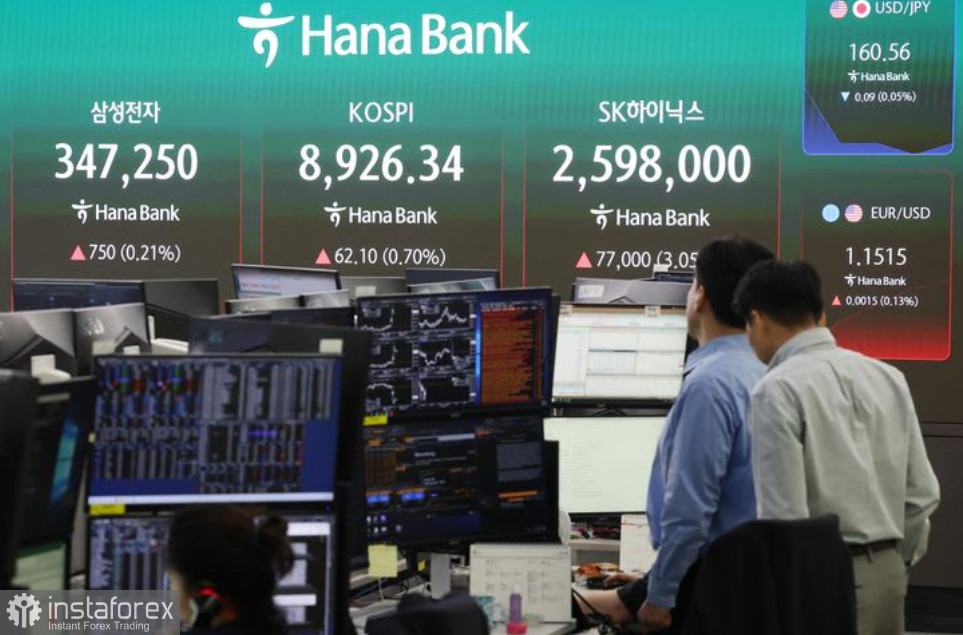
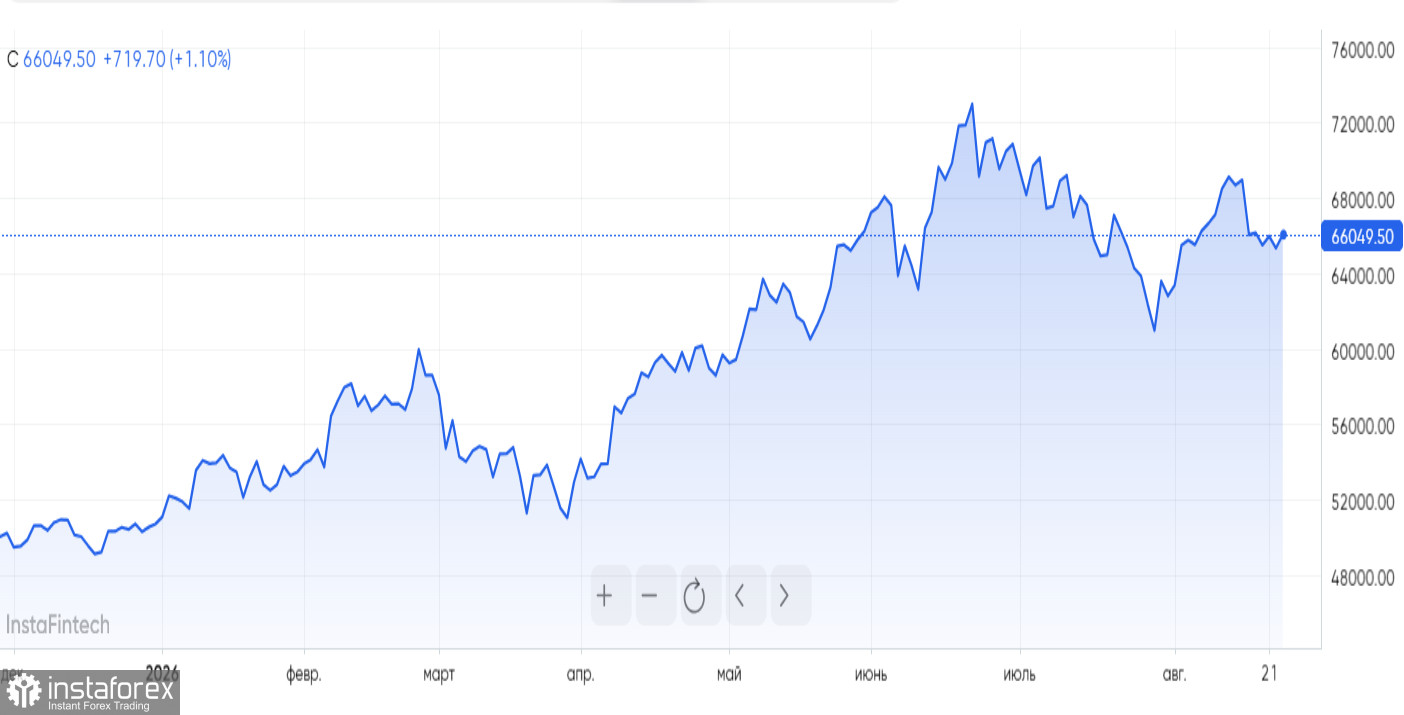
Tuesday in Asia began like a thriller and by the close had turned into a triumph of greed and common sense. Japan's Nikkei 225 and South Korea's KOSPI plunged at the open, triggering panic. By the session's end, both indices not only recouped losses but closed in solid green.
The reason: an army of bargain hunters rushed to buy beaten?down semiconductor stocks ahead of the week's marquee tech event — Nvidia's quarterly report.
Stock market roller coasters
The day's final figures tell the story. The KOSPI plunged over 4% in the opening minutes but managed to finish up 0.68% at 6,742.74. Japan's Nikkei 225 fell almost 1.4% at the intraday low, dropping below the 65,000 psychological level, but bulls pushed it into a 0.5% gain at 65,856.43. The broader Topix added 0.5% to 4,093.67.
"Topix traded in the green practically from the open, a clear sign of continuous inflows into Japanese equities," says Shuji Hosoi, senior strategist at Daiwa Securities. "Semiconductor stocks pressured the Nikkei, but their dynamics changed sharply once the Korean benchmark began to recover."
The shadow of Wall Street and Nvidia's seven?day slide
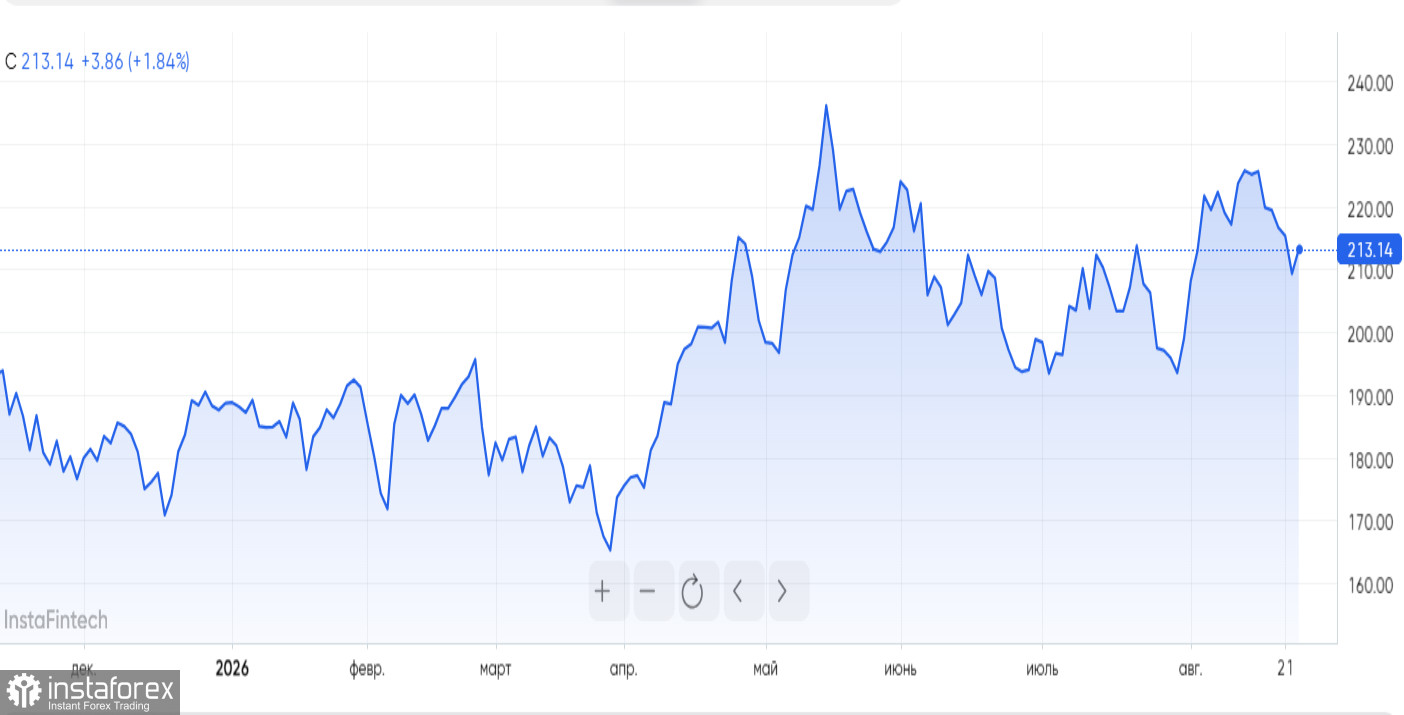
What sparked the morning sell?off? Weakness in US markets overnight. The Nasdaq?100 fell nearly 1%, and the Philadelphia Semiconductor Index lost 2.7%.
Nvidia was the headline maker — hitting new intraday lows for the seventh straight session, the longest losing run since 2022. Nervousness was fed by the company notifying customers of price increases for AI?enabled systems to be delivered next year.
Seoul and Tokyo at the storm's epicenter
South Korea took the first blow. Samsung Electronics shares plunged after its August 21 plan for shareholder returns proved too modest for investors expecting an aggressive buyback; SK Hynix also fell sharply. Appetite returned through the session: both companies recovered, with Samsung closing roughly flat and SK Hynix up 0.42%.
Tokyo saw a similar drama. Advantest and Kioxia led losers at the open but produced strong comebacks. Kioxia, which fell briefly below £50,000, closed up 0.65% at £51,260.
Other winners included SoftBank Group (+2.25%) and fiber?optic cable makers Furukawa Electric and Fujikura (+6% and +4.15%, respectively), drawing bargain?hunters' attention.
Fundamentals are intact, and the main intrigues lie ahead The rapid recovery was driven not just by crowd psychology but by macro factors. US Treasury yields retreated, easing the pressure of foreign capital outflows from East Asian markets.
Kiwoom Securities' analysts summed it up: the current sell?off is "volatility of supply and demand," not a broken fundamental. Memory?chip prices and earnings visibility remain robust.
All eyes are now on Wednesday — Nvidia's report for May–July. Analysts expect a near?miracle: quarterly revenue should almost double to about $92 billion. On Friday, Fed Chair Kevin Warsh will speak at Jackson Hole.
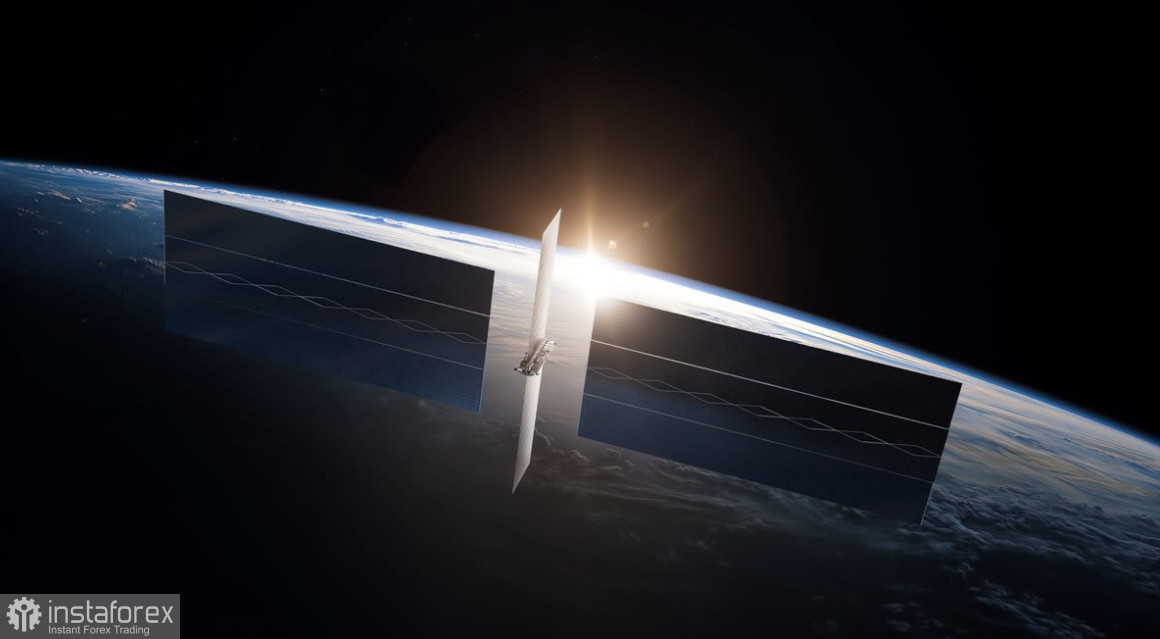
The idea of full data centers in open space still sounds like sci?fi, but Elon Musk and Nvidia are already writing that story into reality.
On Monday, the tech giants announced an unprecedented alliance: SpaceX's AI division will deploy Nvidia Vera processors and the Vera Rubin platform to serve the next generation of agentic AI. The advanced compute architecture is planned to be literally placed in orbit aboard the Starmind AI1 satellite.
SpaceX CEO Elon Musk posted plans on X: the first orbital launch is scheduled for Q4 2027, and by 2028 space operations should reach "meaningful scale."
Servers among the stars According to Bloomberg, Musk describes orbital data centers as "significantly simpler, cheaper, more compact and lighter" than traditional ground racks.
The Starmind AI1 satellite will be built around Nvidia's optimized rack system Vera Rubin NVL72 — the accelerated architecture that is a gold standard in ground AI farms today.
Nvidia's statement says xAI will use Vera processors to power the Grok agent AI. The chips will handle orchestration, code execution, data processing and complex simulations.
Technical specs impress: Vera features 88 Olympus cores designed by Nvidia and delivers memory bandwidth up to 1.2 TB/s, enabling agent AI tasks up to 1.8? faster than classical x86 processors.
The tech romance deepens
This contract is only the tip of the iceberg in deepening ties between the two corporations. In early August, Musk publicly said SpaceX will use Nvidia chips exclusively for its AI infrastructure, calling the Vera Rubin architecture "the best available."
You might expect such news to send the stocks skyward. Instead, the market reacted the opposite way on Monday: shares of both companies dipped. Nvidia fell about 3%, continuing a sell?off, and SpaceX also slipped. NDTV Profit notes SpaceX briefly jumped on the announcement but then rolled back.
The weakness is not about the partnership itself. Nvidia remains under pressure from strict export controls and rising memory costs. SpaceX, adapting to early stages of public trading, is naturally volatile and still well below its post?IPO highs.
All instruments discussed are available on the InstaForex platform. To seize opportunities in this turbulent market, open an account on the company website and download the InstaForex mobile app to keep your finger on global price action and trade on the go.
MobileTrader - ¡El comercio siempre al alcance de su mano!
¡Descárgalo y empieza ya!
You have already liked this post today
*El análisis de mercado publicado aquí tiene la finalidad de incrementar su conocimiento, más no darle instrucciones para realizar una operación.
 Para cualquier consulta sobre contenidos, póngase en contacto con editorial-board@instaforex.com


