

MobileTrader
MobileTrader - ¡El comercio siempre al alcance de su mano!
¡Descárgalo y empieza ya!

 05.02.2026 03:09 PM
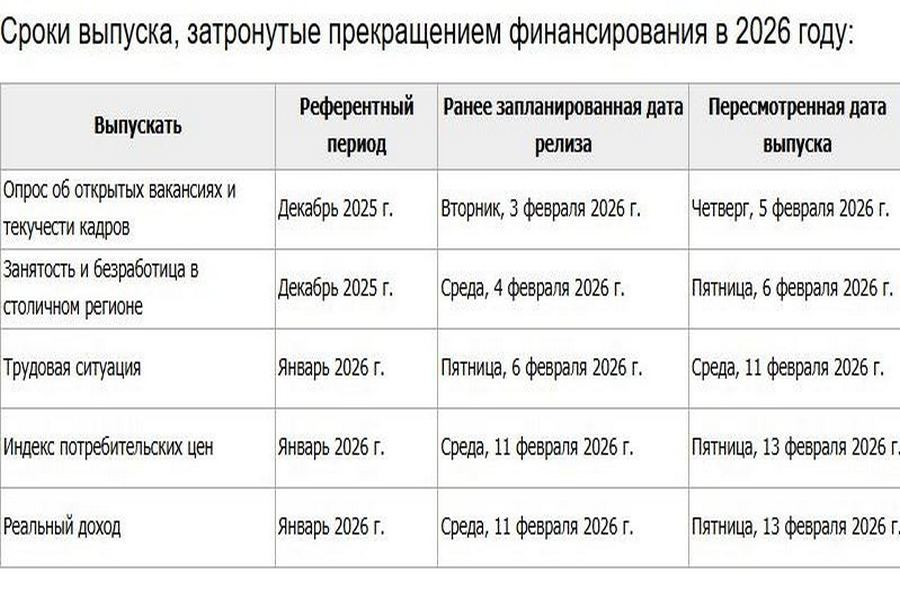
Pause in statistics. The US Bureau of Labor Statistics announced the postponement of some January releases due to the government shutdown. This is a short-term delay caused by temporary funding lapses at certain agencies. New publication dates have been moved to the schedule shown in the table below once funding is approved. The US equity market finished the session in the red, with the main blow again hitting the technology sector.
Sales intensified after a collapse in Advanced Micro Devices (AMD) shares. The stock plunged by more than 17% on disappointing guidance despite strong results. JPMorgan analysts say investors now expect strategic AI-led growth stories from such companies, not only good earnings. In AMD's case, the market doubted its ability to compete with Nvidia on even terms.
Chips pull the market down. AMD's correction triggered a cascading sell-off across the semiconductor segment. Broadcom fell by 7%, Lam Research and Applied Materials dropped by more than 9%, and Micron tumbled by nearly 10%. The wave of profit-taking hit a sector that in recent months had been viewed as an AI-cycle beneficiary. Sales affected not only chipmakers but also led investors to re-rate software companies. The sector came under pressure after new AI products that, in market participants' view, could reduce margins in areas like:
Market reacted harshly. Several names in the segment hit one-year lows. Pressure fell on Intapp, Varonis, ServiceTitan, HubSpot, Atlassian, Salesforce, and ServiceNow. Bitcoin, a barometer of risk appetite, also lost about 3% amid rising market uncertainty.
Tech sector: the market is slow to buy the dip. Continued selling in the tech segment (especially software) is finding less support than in previous corrections. Unlike prior pullbacks, when "dip buyers" stabilised prices, the current decline is not provoking the usual buying response. Reuters analysts note that traditional bargain hunting is absent so far, particularly in segments exposed to automation and AI risk.
"In general, our customers have not been as eager to buy dips in software as they are for precious metals and semis," Steve Sosnick, chief strategist at Interactive Brokers, said. Microsoft was an exception: its shares rose by about 1% on February 4, underscoring the market's growing tendency to split tech into winners and losers under the emerging AI paradigm.
As Certuity's chief investment officer Scott Welch told CNBC, investors are becoming selective in their valuations. In hs view, Microsoft, like other leaders, is viewed as a strategic player with real infrastructure and AI development advantages. At the same time, shares of more vulnerable IT players continue to weaken — not least because market focus has shifted from growth to durability and capital efficiency.
He added that, in recent years, large tech companies have received an outsized share of attention and capital, while ordinary market participants have been overlooked. Scott Welch concluded that value stocks have lagged, small caps have lagged, and international markets have largely been ignored, despite often outperforming US markets the previous year, adding that this is beginning to change.
Attempts by Washington and Tehran to resume talks on the nuclear programme have either reached an impasse, been derailed, or are ongoing. Talks scheduled for Friday were officially cancelled after the sides failed to agree on the format and venue. Iran insisted on a bilateral format in Oman, limiting the agenda to the nuclear issue alone. The US, in turn, demanded a multilateral format in Istanbul that would broaden the discussion beyond the atomic programme.
According to sources cited by Axios and NBC, the US presented a hard ultimatum: either talks take place in the originally agreed format, or the dialogue is ended. Iran's delegation replied unambiguously: "Then — nothing." Tehran representatives subsequently left the venue. Asked by NBC whether Iran's Supreme Leader should be "worried" in the current situation, Donald Trump replied: "He should be very worried." The comment, made in the context of the cancelled talks, heightened fears of a possible escalation toward military action.
Officials in the White House directly link the collapse of diplomacy to a rising risk of strikes on Iranian targets. Assessments are particularly tense with respect to potential impacts on the country's oil infrastructure, which could become a cornerstone of Washington's pressure strategy. Nevertheless, administration representatives say the door to negotiations remains open if Tehran returns to the originally agreed arrangements. A window of opportunity exists for the coming week, but without significant softening of positions on both sides a compromise appears unlikely at this time.
Meanwhile, the European Parliament, following a series of political contacts and a shift in rhetoric from the Trump administration, has decided to revisit a previously shelved trade agreement with the United States. The International Trade Committee has moved the vote to 24 February, but final ratification remains uncertain. The key sticking points are demands from centre-left forces in the Parliament. Socialists and Democrats say they will not support the deal unless it includes a temporary suspension mechanism in the event of threats to EU sovereignty, and unless certain trade barriers are eased, in particular the removal of US tariffs on steel and aluminium introduced earlier.
At the same time, the European People's Party is pressing for a speedy vote, arguing that delay endangers economic activity and the stability of trade relations with the EU's largest partner. The deal, negotiated last summer, has already attracted criticism as unbalanced in terms of European firms' access to the US market. However, one of the main arguments in favor of the agreement is that it preserves the strategic partnership with Washington and helps stabilize transatlantic relations amid geopolitical turbulence.
Despite the recent recovery in the US dollar, a Reuters survey of FX strategists points to a high probability of dollar weakness in the second half of the year. Sources of uncertainty include both expectations for interest rate cuts and growing doubts about the Federal Reserve's independence. Since the start of the new Trump administration, the dollar has already lost about 11% against a basket of major currencies. The president's repeated calls for the Fed to cut rates and his openness to a weaker dollar have reshaped market expectations.
A new round of debate began after Kevin Warsh was put forward as the Fed nominee. The US dollar index strengthened temporarily on the news. However, analysts note that Warsh's candidacy is viewed as a potentially "dovish" choice in the sense that it could trigger a cycle of rate cuts this year. The euro is stable, while the long-term outlook is constructive. In Reuters' survey conducted from January 30 to February 4, most experts expect the euro to:
Despite resilient inflation and consumer price dynamics that remain above target, investors still expect at least two Fed rate cuts this year. FX strategists report no major changes in dollar positioning, including in futures. Meanwhile, the European Central Bank is expected to keep its policy rate unchanged through year-end, supporting the euro in the medium term. According to Bank of America FX strategist Alex Cohen, the current trajectory of White House policy could depress real yields and, consequently, put pressure on the dollar during the year.
Cohen warned that if the Fed cuts rates while inflation remains persistent, investment flows could reallocate away from the dollar, making the currency more sensitive to shifts in global liquidity. US Treasury Secretary Scott Bessent told the House that he regards the Fed as an independent institution but that its accountability should be strengthened. He argued that the Fed has eroded public trust by presiding over the largest inflation surge in decades.
"The independence of the Fed is based on its trust with the American people, and the Federal Reserve lost the trust of the American people when it created, when it allowed the greatest inflation of 49 years to ravage, ravage working people in this country," Bessent said at the Financial Services Committee hearing. He stressed the Fed must remain independent in its core function — setting monetary policy. However, he added that other programs, including capital projects, climate initiatives, or public political commentary, in his view, "blur the lines of institutional independence."
Asked whether the president should intervene in Fed policy through rhetoric, Bessent responded that it is his legal right to do so. The comment drew mixed reactions. Congressman Juan Vargas described Bessent's remarks as an attempt to discredit the Fed. He said that it had sounded as if the other person were repeating the president's talking points about Powell verbatim and that such comments were disappointing, especially given the pressure on independent institutions. Tensions between the White House and the Fed intensified against the backdrop of a criminal inquiry opened by the Justice Department into Fed Chair Jerome Powell. The probe concerns his Senate testimony regarding costs related to renovation of the Fed's headquarters.
Powell said the investigation is, in essence, a continuation of the political clash with the president. Powell's term expires in May. The president has already nominated Kevin Warsh as the next chair. The appointment is viewed as part of a broader strategy to increase the administration's influence over monetary policy, especially amid persistent pressure on rates. Lawmaker Gregory Meeks raised sharply the issue of World Liberty Financial, a company linked to the president, and demanded a suspension of licensing for firms connected to the administration until all checks are complete. "Stop covering for the president. Don't be a flunky — work for the American people!" Meeks argued.
February 5
February 5/03:30 / Australia / ***/Trade balance, December (surplus) /Previous: 4.353 bn / Actual: 2.936 bn / Forecast: 3.300 bn/AUD/USD: bullish
Australia's trade surplus narrowed to 2.94 bn in November, the smallest surplus since August, and came in below market expectations. The decline reflected a 2.9% drop in exports, driven by weaker shipments of ores and mineral products, including lower deliveries to South Korea, India, and Japan, and a 10.5% fall in exports to the United States after new tariffs. Exports to China also declined. Imports rose 0.2% to record levels on stronger industrial goods shipments, reflecting resilient domestic demand ahead of the holiday season. If the December surplus approaches the 3.3 bn forecast, the Australian dollar may receive support as the trade balance recovers.
February 5/10:00 /Germany /**/Industrial orders, December (m/m)/ Previous: 1.6% / Actual: 5.6% / Forecast: -2.2% / EUR/USD: bearish
Germany's industrial orders rose 5.6% in November versus October, beating prior growth and consensus, and marking a third consecutive month of positive momentum. Gains were led by large orders in metal fabrication, transport, and defense sectors. Moderate increases were recorded in electrical equipment, machinery, and optics. Domestic orders rose 6.5%, foreign orders 4.9%, with notable improvement across euro-area markets. If December data instead show the expected -2.2% decline, downside pressure on the euro could intensify.
February 5/11:30 /Eurozone /**/HCOB Construction PMI, January /Previous: 45.4 / Actual: 47.4 / Forecast: 48.0 / EUR/USD: bullish
HCOB's euro area construction PMI rose to 47.4 in December from 45.4, signaling a slowing in the pace of contraction. Support came from Germany and a smaller decline in residential building. Commercial construction contracted less, while civil engineering weakened slightly. Employment changes were neutral, with German and Italian gains offsetting falls elsewhere. Input prices rose to a six-month high. If January prints near 48.0, the euro could gain on signs of stabilization in the construction sector.
February 5/11:30 / Germany /**/ Construction PMI, January /Previous: 45.2 / Actual: 50.3 / Forecast: 50.5 / EUR/USD: bullish
Germany's construction PMI jumped to 50.3 in December from 45.2, indicating a return to expansion for the first time since March 2022. Civil engineering provided the strongest contribution — its fastest growth since 2011.
Input-cost inflation accelerated, while purchase prices hit a three-month high and output prices rose at the fastest pace in more than two years. Companies' future activity outlooks remain cautious. If January prints near the 50.5 forecast, the euro may strengthen on a confident construction recovery.
February 5/12:30 /United Kingdom /** /Construction PMI, January /Previous: 39.4 / Actual: 40.1 / Forecast: 42.0 / GBP/USD: bullish
The S&P Global UK construction PMI rose to 40.1 in December from a five-year low in November but remained in contraction for the fifth consecutive month. Survey respondents reported a decline in new orders amid weak client confidence and delays to investment decisions caused by uncertainty around the 2026 budget.
Nevertheless, industry optimism has improved: more than one-third of firms expect the business environment to brighten over the coming year, citing new municipal contracts and the prospect of looser monetary policy. If January's reading reaches the 42.0 forecast, sterling could strengthen on hopes of stabilization in the construction sector.
February 5/13:00/Eurozone / ***/Retail sales, December (m/m)/Previous: 1.9% / Actual: 2.3% / Forecast: 1.6%/ EUR/USD: bearish
In November, retail sales in the euro area rose by 2.3%, accelerating from October (1.9%) and exceeding the market forecast of 1.6%. This reflects a solid recovery in consumer demand amid improving inflation expectations and resilient real incomes in several euro area countries. However, growth remains modest compared with historical extremes:
If December's pace of growth slows and approaches 1.6%, the euro could come under pressure from weakening consumer activity.
February 5/15:00 /15:30 / United Kingdom / ***/Bank of England rate decision and press conference /Forecast: 3.75% / Actual: 3.75% / GBP/USD: volatile
The Bank of England is expected to hold its policy rate at 3.75%. Officials may signal the possibility of cuts later in 2024, but with inflation still slowing the bank is not ready to act immediately. December's inflation rate of 3.4% remains the highest among G7 countries. While most Monetary Policy Committee members have previously argued for a gradual easing, wage growth and early signs of economic recovery argue against hasty loosening. Investors will watch closely for the Bank's assessment of current inflation, labor market conditions and the restrictiveness of policy. Any change in wording in the statement could trigger heightened sterling volatility.
February 5/15:30 /United States/ **/Challenger job cuts, January (announcements)/ Previous: 71,321 / Actual: 35,553 / Forecast: 43.0 /USDX: bearish
Job cut announcements in the US fell to 35,553 in December, the lowest monthly total since July 2024. The figure was half of November's level and 8% lower than December a year earlier, making December the quietest month for announced cuts in 2025. Challenger, Gray & Christmas attributes the decline to a post-restructuring adjustment and signs of hiring against a seasonal lull.
Despite the monthly slowdown, announced cuts totaled 1.2 million for the year that is 58% higher than in 2024 and the largest annual tally since 2020. The public sector and technology firms accounted for the biggest shares of announcements, with the latter continuing to trim headcount amid accelerated AI adoption. Hiring plans for 2026 have also weakened to their lowest since 2010. A January print below the forecast of 43,000 could unsettle markets by signaling a slower labor market adjustment and exerting near-term pressure on the dollar.
February 5/16:15 / 16:45 /Eurozone / */ ECB rate decision and press conference /Forecast: 2.15% / Actual: 2.15% / EUR/USD: volatile
The ECB is expected to keep its key policy rate at 2.15%, maintaining a pause in the tightening cycle. Recent data shows a faster disinflation: headline inflation eased to 1.7% in January, and core inflation fell to 2.2%, the lowest readings since October 2021. Despite the improvement, the bank's rhetoric remains cautious. If rates are held steady and inflation forecasts are trimmed, the euro could react with heightened volatility.
February 5/16:30/United States/ */Initial jobless claims (week to Feb 2) /Previous: 210k / Actual: 209k / Forecast: 212k/USDX: bearish
For the week ending February 2, US initial jobless claims totaled 209,000, down 1,000 from the prior week and below consensus, remaining close to multi-month lows. Continuing claims fell by 38,000 to 1.827 million, the lowest level since September 2024. The slowdown in labor demand, coupled with only moderate hiring, is consistent with the balanced cooling path for the labor market described by the Fed chair. Public sector filings also declined. If next week's initial claims come in near the 212,000 forecast, the US dollar could weaken as employment pressure remains subdued.
February 6
February 6/02:30 /Japan / **/Household spending, December (m/m) / Previous: -3.0% / Actual: 2.9% / Forecast: 0.0% / USD/JPY: bullish
In November, household spending in Japan rose by 2.9%, offsetting the prior 3.0% decline. This is the fastest increase since the second quarter of 2025. The recovery in spending extended across several categories:
Growth was particularly strong in clothing (+7.5%) and education (+10.2%). On a monthly basis, spending rose 6.2%, more than twice the forecast. Slowing inflation on core goods and seasonal demand supported the overall increase. At the same time, declines in spending on medical services and energy were less pronounced. If December's reading holds near 0%, that would weigh on the yen.
February 6/10:00 / Eurozone / ***/ Trade balance, December (surplus) /Previous: 17.2 bn / Actual: 13.1 bn / Forecast: 14.1 bn /EUR/USD: bullish
Germany's trade surplus narrowed to €13.1bn in November, the smallest surplus since late 2022, as exports fell 2.5%, missing expectations.
Imports, by contrast, rose 0.8%, beating forecasts, driven mainly by larger purchases from China, the United States, and the UK. Higher imports point to a partial recovery in domestic demand. If the December trade surplus reaches the €14.1bn forecast, the euro could receive modest support from improved external sector signals.
February 6/10:00 /Germany /**/ Industrial production, December (m/m) /Previous: 2.0% / Actual: 0.8% / Forecast: -0.3% / EUR/USD: bearish
Germany's industrial output rose 0.8% in November versus October, well above forecasts. The gain was driven primarily by:
Excluding energy and construction, output increased by 2.1%. At the same time, production of intermediate and consumer goods fell. Construction-related manufacturing declined by 0.8%. On an annual basis, industrial production was up 0.8%. The medium-term trend also remains positive: production in September–November, was 0.7% higher than in the preceding three months. If December data confirms the expected 0.3% contraction, that would add further downward pressure on the euro.
February 6/10:00 / United Kingdom / **/Halifax house price index, January (m/m)/ Previous: 0.6% / Actual: 0.3% / Forecast: 0.0% / GBP/USD: bearish
Halifax house prices in the UK rose 0.3% in December, marking the weakest pace since November 2023. On a monthly basis, prices fell 0.6%, the second consecutive month of a negative movement. The average house price slipped to £297,755, the lowest level since June. Halifax analysts said the slowdown at the end of the year reflected ongoing uncertainty, although transaction volumes remain close to pre-pandemic norms. Demand is expected to be supported in 2026 by lower mortgage rates and wider access to credit.
If the January reading edges toward zero, the pound could come under additional pressure amid weak housing market momentum.
February 6/14:00 /Germany / **/New car registrations, January/ Previous: 9.7% / Actual: -6.6% / Forecast: 3.4% / EUR/USD: bullish
In January, new car registrations in Germany fell 6.6%, contrasting with a 9.7% rise in December. For the full year 2025, sales totaled 2.9 million units, up 1.4% from the previous year. The first month of 2026 points to a possible start of a correction in this key sector of the economy. If January's reading approaches the 3.4% forecast, it could provide moderate support to the euro, particularly if markets interpret it as stabilization at lower levels.
February 6/16:30 / Canada / **/Employment change, January /Previous: 53.6k / Actual: 8.2k / Forecast: 7.0k / USD/CAD: bullish
Canadian employment rose by 8.2k in December. The print was well below recent gains but above consensus. Full-time jobs increased by 50k while part-time positions fell by 42k. The largest employment gains were in health care, social services, and household and repair services.
Job losses were concentrated in professional and scientific-technical industries. If January's report confirms a 7.0k rise, the Canadian dollar may weaken.
February 6/18:00/ Canada / ***/ Ivey PMI, January/Previous: 48.4 / Actual: 51.9 / Forecast: 49.7 / USD/CAD: bullish
Canada's Ivey PMI rose to 51.9 in December, returning above the neutral 50 mark after a decline the previous month. The reading beat both the prior figure and market expectations, signaling a consolidation of positive business activity trends. The employment subindex increased to 53, indicating job growth, while the inventories and deliveries measures fell, which may reflect more efficient logistics management. If the January reading comes in near the 49.7 forecast, it could put pressure on the Canadian dollar.
February 6/18:00 / United States / **/ University of Michigan consumer sentiment (prelim), February /Previous: 52.9 / Actual: 56.4 / Forecast: 55.0 /USDX: bearish
The University of Michigan's consumer sentiment index was revised up to 56.4 in January, exceeding both the December reading of 52.9 and the preliminary estimate. This marked a second consecutive month of gains and the highest level since August 2025, with improvement evident across income groups, ages, and political affiliations. Nonetheless, sentiment remains below the level of a year ago.
Consumers still report that high inflation is denting purchasing power and remain cautious about employment prospects, so confidence is muted despite one-year inflation expectations falling to 4.0%, the lowest since January 2025. By contrast, long-term inflation expectations rose to 3.3%. If February's reading comes in near the 55.0 forecast, the dollar could weaken amid only a modest recovery in consumer confidence.
February 6/19:00 / Russia / /** / Retail sales, December /Previous: 4.8% / Actual: 3.3% / Forecast: 2.7% / USD/RUB: bullish
In November, retail turnover in Russia rose 3.3%, slowing from a 4.8% gain in October but beating the 1.8% consensus. The improvement was driven by trade companies, where sales climbed 4%, despite a 14.2% drop in the retail markets and fairs segment. On a monthly basis, turnover fell 3.1%, fully offsetting a 2.7% increase in October. Cumulative retail turnover growth for January–November stood at 2.5%. If December's outcome comes in near the 2.7% forecast, the ruble may weaken.
February 6/19:00 / Russia / GDP growth, Q4 /Previous: 1.1% / Actual: 0.6% / Forecast: 0.7% / USD/RUB: bearish
Rosstat estimates that Russia's economy grew 0.6% in Q3 2025, the slowest pace since 2023. The slowdown reflects lower oil prices, a contraction in trade with the EU and China, and a fiscal tilt toward military spending at the expense of investment.
Growth in industry, construction and services lagged the prior quarter: manufacturing rose 1.4% versus 3.8% earlier, and construction grew 1.4% versus 2.7%. Trade, transport, and real estate showed negative dynamics, while agriculture was the only sizeable positive contributor, expanding by more than 3%. If Q4 GDP growth comes in at about 0.7%, that would likely support a moderate appreciation of the rouble as economic activity stabilizes.
Feb 5, 02:30/US / L. Cook (Fed governor) speaks/USDX
Feb 5, 15:30 /UK/ Andrew Bailey (BoE governor) speaks/GBP/USD
Feb 5, 16:45 /EU/Christine Lagarde (ECB president) speaks / EUR/USD
Feb 5, 18:50/US/Rafael Bostic (Atlanta Fed president) speaks/ USDX
Feb 5, 20:25 / Canada/ Tiff Macklem (BoC governor) speaks/ USD/CAD
Feb 6, 01:30 /Australia/ Michele Bullock (RBA governor) speaks/ AUD/USD
Feb 6, 04:30 /Japan/ Kazuyuki Masu (BoJ policy board) speaks/ USD/JPY
Feb 6, 09:45 /EU/ Piero Cipollone (ECB executive board) speaks /EUR/USD
Feb 6, 15:00/ EU/ Piero Cipollone (ECB executive board) speaks /EUR/USD
Feb 6, 20:00 /US/ Philip Jefferson (Fed vice chair) speaks /USDX
Speeches by senior central bank officials are also scheduled over the coming days. Their comments typically spark volatility in currency markets because they can signal regulators' intentions on future interest rate moves.
The economic calendar is available via the link. All figures are reported year-on-year (y/y) unless otherwise noted. Month-on-month readings are marked (m/m). Trade balance, export, and import values are shown in the local currency. An asterisk (*) denotes, in ascending order, the importance of the release for instruments available on the InstaForex platform . Publication times are given in Moscow time (GMT+3:00). To open a trading account, click here. Also see InstaForex market video news . For convenient access to instruments on the go, we recommend downloading the MobileTrader app.
MobileTrader - ¡El comercio siempre al alcance de su mano!
¡Descárgalo y empieza ya!
You have already liked this post today
*El análisis de mercado publicado aquí tiene la finalidad de incrementar su conocimiento, más no darle instrucciones para realizar una operación.
 Para cualquier consulta sobre contenidos, póngase en contacto con editorial-board@instaforex.com


